Showing posts with label Finnish. Show all posts

Sunday, February 12, 2012

Six Sentence Sunday: Palakainen

A simple concept: six sentences to win you over. Here's mine, from "Palakainen," one of the stories from Unikirja. As a special treat, you can read the entire story at Mythic Journeys. See the rest of the titbits at Six Sentence Sunday. And think about buying the ebook version of Unikirja. Kiitos.

 Swanlike she was born, swanlike did she grow, with white hands and a graceful neck and eyes that looked unblinking at you. The servants, who all grumbled day and night about their work, would give her the best of the cream, the finest weaving, the sweetest olut brewed for her. Her brothers and sisters too, who should be jealous of the attention our little star received, instead protected her, coddled her. Her sisters did the mending rather than let her prick her fingers. Her brothers gathered kindling, which should be her job, carried hay to the cows in winter, rather than let her chap her hands. Swanlike they stayed, white.


Palakainen she was named, our little tidbit, our little treat...


Tuesday, December 13, 2011

Tuesday's Overlooked Films: The Long Kiss Goodnight

I got into a discussion on Twitter with Anne Billson about Finnish music and films, and we both lamented the lack of love in Hollywood for Renny Harlin when people like Ridley Scott continue to be trumpeted. I suppose I have a weakness for a Finnish director who always manages a little nod to his homeland in the midst of a blockbuster, whether it's a pirate ship flying the blue and white flag in Cutthroat Island or the Finlandia vodka prominently served in Deep Blue Sea. I find it hard to believe that I have not written about this film here before, but I searched the blog and turned up nothing, so let's assume it's true (yes, I did mention it in a column on holiday films for BitchBuzz).

I love this movie.

A lot of this is down to Geena Davis' winning performance as the amnesiac suburban mom who discovers she's really a lethal weapon. Davis has done a lot of work behind the scenes since then with the Geena Davis Institute on Gender in Media and while promoting the film she spoke about how her then-husband Harlin would balance the punishment she took on screen with therapeutic massage at night. She takes a beating in this film, but she's also warm and funny as well.


Samuel L. Jackson is great fun of course: Shane Black's script (written before repeating Lethal Weapon films sucked a lot of life out of him) sets him up as fairly hapless and yet always hopeful, though he can't get song lyrics right (heh!). Brian Cox is terrific (of course) in a small role and utters one of the funniest lines in the film (although the humour is due as much to his dry delivery as to the line). Craig Bierko makes for a fetching psychopath. David Morse and Patrick Malahide offer terrific performances as well in supporting roles. But this is Davis' star turn and she makes the most of it.

Chefs do that.

See the round-up of overlooked films, television and other audio-visuals over at Todd's blog. And if you haven't seen this film? Do. Look, it's really cheap. And it totally kicks ass.


Saturday, September 03, 2011

Publications: Blink Ink & Scribing Ibis

Here's the lovely package you get when you order the Noir issue of Blink|Ink. And you will order it, won't you? It's got a lovely story by me and gruesomely hilarious one by Mr B (Paul Brazill) and loads of great photography as well as some terrific stories told in a flash -- and for just two bucks! A gorgeous little bit of mail to receive. I should also mention that the Scribing Ibis collection is now available at Amazon. It reprints my story "Sinikka Journeys North" along with a wealth of myth-inspired fiction.


The hell that is moving is over; big thanks to Robert for the final rescue (and sanctuary :-), thanks to Barb for giving Kipper a great foster home; thanks to Catherine for duty above and beyond, thanks to my pals on Twitter for listening to my panicky or whinging messages (especially @lochee :-), big thanks to Byron for a last burst of energy and to the countless others who helped, stored, or took things I needed to do without >_<


Not quite the foot massage I had in mind...


I had planned to have a bit of a lie in this morning, but this was not allowed.


Yes, multiply this by all the limbs (and stomach: how do you bruise your stomach? Very easily it turns out). Sore all over. The bruises will heal. And less achey already.

Friday, August 12, 2011

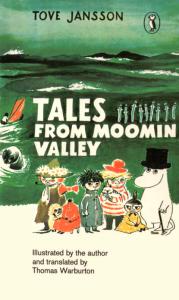
Friday's Forgotten Books: Tales from Moomin Valley

Known and loved around the rest of the world, Tove Jansson's Moomin books seldom get exposure beyond the Finnish-American communities in this country. I suppose it's because Moomintroll himself often presents a rather melancholy figure, who feels sad without everybody around him demanding that he cheer up.

Shock!

When you look at the aggressively happy face of so much of American children's books (in contrast to the gritty, dark nature of so much YA reading) I suppose the Moomin tales stand out. Loosely based on Jansson's own upbringing in a bohemian family of artists, all the characters are eccentric and allowed to remain so. They range from the Moomins themselves to the nervous Sniff, the anarchic rebel Little My (after whom I named one of my five-string kanteles) and of course, my favourite, Snufkin -- to say nothing of Hattifatteners, Hemulens and of course, Fillyjonks. The books are about doing and making and finding your own interests and being curious about the world and the people in it.

Tales from Moomin Valley collects short tales that happen around the longer books. One of the underlying themes is that people who worry too much generally find they're wasting their time. Peace and a mutual respect are the only real requirements. In "The Invisible Child" (who's become invisible because she's too timid) there's a wonderful moment where Jansson writes of the family, "They continued their work in peaceful silence." People seldom know what they would really enjoy: the "Hemulen Who Loved Silence" finds out that maybe it would be more fun in his park if people could laugh and "possibly even hum."

The first story is a Snufkin one: he's my role model -- especially now. When Moomin and Sniff meet Snufkin for the first time in Comet in Moominland he tells them, "I'm a tramp and I live all over the place...I wander about and when I find a place that I like I put up my tent and play my mouth organ." When asked if he might be a painter or a poet, Snufkin says, "I am everything!" He finds the memory of things far superior to having the things themselves (hence my role model) and hates all kinds of authority, especially those who wield power for its own sake. Thus he hates the Park Keeper who continually puts up signs forbidding things: "All his life, Snufkin had longed to pull down notices that asked him not to do things he liked to do."

In "The Spring Tune" Snufkin wanders along, a tune just about ready to be born from his head. I love the way Jansson talks about the process of creation, finding that just-right moment to make something manifest, too soon and it gets stuck, too late and it escapes all together. When he thinks of how Moomintroll will like the song, he suddenly starts to feel annoyed with the idea that his friend is waiting for his return. Nothing a traveler likes less than being expected. When a strange little creature treats him with something like hero-worship, Snufkin warns, "You can't ever be really free if you admire somebody too much."

These stories are just wonderful: get all of Jansson's books, including the fantastic and fun comics collections from D&Q.


As always, check with Patti Abbott's blog for the full list of overlooked treasures [oops, or this week over at Todd's].

Tuesday, July 26, 2011

Tuesday's Overlooked Film: Jade Warrior

FUN WITH SLEDGEHAMMERS OR
"IN SEARCH OF THE SAMPO"

When did these filmmakers look into my dreams? I am, perhaps, one of a small number who form the ideal audience for this film that spins together Finnish mythology and wu xia action, but I’m sure its magic will appeal to a wide audience—if they can get over the strangeness of the concept.

Admittedly it sounds a bit esoteric: a mixture of the ancient Finnish story collection, THE KALEVALA, and the sword and sorcery of early China—with a little modern Helsinki life thrown in, too. The film opens on the provocative image of a woman with a lock tattooed on the back of her neck. We see her lover wrap his arms around her, then title cards begin to tell us of the ancient story of the Sampo, awkwardly translated on this Bonzai Media DVD as “the happiness bringing machine.”

Well, sort of.

The Sampo was the magic mill forged by the mythic smith Ilmarinen. Out one side it produced salt, out another flour and out the third side, gold. With refrigeration and various chemical preservatives, we forget how important salt has always been as a preservative. Flour—well, the bread is the life. Gold’s value is still clear to us. The point is the same. Everybody wanted it, everybody fought over it, and consequently, it was reduced to rubble.

Next there is the story of Loviatar from the 45th runo of THE KALEVALA. She’s the mother of the nine diseases, the last of which is too horrifying to even have a name (although later in the book, they’re defeated by the eternal sage, Väinämöinen—yes, it does begin to sound like a J.R.R. Tolkien saga; where do you think he got a lot of his ideas?). The filmmakers present this tale as an Chinese legend, however, where the ninth son is a demon so evil that he steals the Sampo.

This conflation is not as whimsical as it first appears. Many scholars have argued for an Asian connection to the story of the Sampo (the most accessible information in English can be found in Juha Pentikäinen’s KALEVALA MYTHOLOGY, Bloomington, Indiana: Indiana University Press, 1989). Although the Sang Fu [“Sampo”] Temple in Tibet turned out not to be the direct link many eager readers hoped for (see, for example, Helsingin Sanomat’s article “Was the Sampo in Tibet?” ), there is much to connect these seemingly disparate cultures. There may even be a rough parallel between Loviatar’s nine demon sons and the nine major dragons in Chinese mythology (or their nine children).

In the movie, this connection between the two cultures comes through most often in the stoic taciturnity of the characters who feel they must accept fate. There’s the abrupt Ronja (Krista Kosonen) who comes to Sang Fu, the antique shop, to unload the belongings of her ex, the morose blacksmith Kai (Tommi Eronen). We get voiceovers from the archaeologist Weckström (Elle Kull), but her quick eyes say more than her words. The only voluble talker is her partner, Berg (played by the delightful Markku Peltola, best known to American audiences as the nearly silent Man Without a Past in Aki Kaurismäki’s film of that name—I swear, the little plastic duck by Kai’s forge must be a nod to that master of filmmaking himself and his film HAMLET GOES BUSINESS, where the melancholy Dane is the scion of a rubber ducky-making business). Berg becomes convinced that Kai can open the mysterious metal box whose polygon shape his workshop echoes.

The two cultures are linked more directly through trips to the past in both ancient Finland and China. It takes longer to tell than it does to see it—there’s the 2000-year-old man clutching that iron box with Chinese lettering on top, then there are Iron Age Karelians meeting up with a wolf who has two warriors with consummate fighting skills on his heels. One of them is the lovely Jingchu Zhang (RUSH HOUR 3) who plays the titular warrior, Pin Yu. As details accrue, it becomes clear that we’re dealing with a narrative of reincarnation and of karmic checks and balances. While the enigmatic Berg taunts Kai into getting in touch with his mystic past as the descendent of the mythic smith, that past gradually begins to impinge on the present of all the characters, much to their surprise. Kai relives a past life when he was Sintai, the son of a smith with an appointment to meet a demon—until he gets sidetracked by the oldest story of all, love.

There’s an elegiac beauty to this film that its €2.5 million price tag would seem to make impossible. Yes, there’s digital enhancing, but a lot of the credit is due to the detailed vision of every scene and also to the fine cast, in particular Tommi Eronen, who seems to have done yeoman’s work getting in shape for both the smithing demands and the martial arts. While this is not the nonstop fight fest that many wu xia films become, the fight scenes work to direct conflict and add a poetic melancholy. Unlike Ang Lee, Annila understands that wiring should enhance the athleticism of a leap, not replace it. The visual aspects of the fights are well thought out, too, complementing the physical repartee with details like Zhang’s fan-like weapon and a variety of swords. In one scene, Eronen wields a kantele (the traditional Finnish lap-harp, also celebrated in THE KALEVALA) both for its plaintive music and for defense.

Not surprisingly, language plays a huge role in the story, requiring the Chinese actors to speak a few lines in Finnish and the Finnish actors to speak Mandarin. While there is some awkwardness involved on both sides, they do surprisingly well (although Eronen’s Mandarin sounds a little too deliberate and awkward at times). For most audience members in this country anyway, both languages will likely seem impenetrably exotic, but their blending does work as part of the thoughtful blend of cultures, myths and times. There was supposed to be an official Region 1 release in the works (no sign at IMDB though) but you can find it on Amazon and eBay; with luck this film will get to an audience who can appreciate its intricate mysteries, millennia-spanning romances and choreographed fights.

When’s the last time you saw a good sledgehammer fight anyway?

[NB: This originally appeared in Up Against the Wall, but I've trotted it out as I need to write about this film some more; plus I am lazy. And busy. So, nyeh!]
Thursday, May 26, 2011

Publication: Finnish Charms

I had nearly forgotten about this: the Mythic Journeys folks have been going through some interesting transitions (which seems entirely appropriate) but the journal is back at last. I gave this paper at the Forging Folklore Conference at Harvard University in May 3-5 2007. Great conference! Peg and Hannah put together a terrific bunch of presenters including Ron Hutton (whom I teased about Kyrie whose voice always accompanied him on Historyonics), my mentors Steve Mitchell and Joe Harris, and the fabulous Byron, whom I met for the first time there. Before I gave the paper, I played the kantele and sang. Yes, me -- singing. I wasn't sure I'd do it until I opened my mouth. Good to do things that terrify you now and then. Love the image they chose.


Finnish Charms:
Appropriating Folk Magic from
the Kalevala and Kanteletar


By K.A. Laity

Kylä vuotti uutta kuuta,
miero päivän nousendoa.
Miepä vuotin minjoavani,
miepä vuotin minjovani.


The village waited for the new moon.
They said my brother would return
empty handed when he was off hunting.
They were wrong. The eagle caught the duck.

Värttinä, “Kylä vuotti uutta kuuta”
Truly they lie, they
Talk utter nonsense
Who say that music
Reckon that the kantele
was carved by Väinämöinen…
out of  a great pike’s shoulders…
no, music was made from grief
molded from sorrow…
so my kantele will not
play, will not rejoice at all…
for it was fashioned from cares
moulded from sorrow.                        
                       

My Kantele, Kanteletar 1:1

One of the least well known of modern reconstructions of folk magic must certainly be the realm of Baltic magic found in the ancient texts of Finland, but it has found a perhaps surprising popular resurgence in  recent years. The reprinting of Kati Koppana’s Snakefat and Knotted Threads has brought a handbook of folk magic to a new generation of reconstructionists, but the nineteenth-century collections The Kalevala and The Kanteletar continue to provide a rich supply of magical practices.  While originally the outgrowth of a rising sense of nationalism in nineteenth-century Finland, the two collections of myth and folklore also record a number of magical charms that give some insight into the ancient practices of the Finns, since lost in the (relatively) late conversion to Christianity and the long-practiced denigration of the indigenous tongues particularly by Swedish and then Russian political control...[read the rest and check out Anya's essay on Egypt, too]

Wednesday, March 30, 2011

Reading: Lumottu

I am very pleased to announce that my play Lumottu will receive a fully cast reading at the Arts Society of Kingston on May 31st. Casting will commence soon. As they make clear on the website, "These are workshops rather than productions, whose focus is on process, not product. It is the hope of the Lab that playwrights will listen to all feedback without defending or explaining their work, then sift through the feedback at their leisure. In the end, only the playwright can decide what feedback to use or lose."

The name of the play is the Finnish word for "enchanted" and it explores the power of myth for people in difficult situations. Here's the description they're using for mailings:

Arja lives with one foot in this world and the other in the mythic world of ancient Finland. Her family has moved to the new world, but the old world’s magic clings to their lives — and deaths.

Sound intriguing? I hope so. This play first jumped from my head Athena-like when I was on the boat in Lake Saimaa heading out to see the ancient rock paintings. I saw it as a performance: a woman dressed as Louhi with her eagle wings behind a girl who was telling the story. It's wonderful to have this one step closer to realising that image.


Much unexpected fun last night: John Crowley was reading at the UAlbany Art Museum. Who knew? Thanks, Christopher for mentioning it in time for me to get there. And we all went out to The Point afterward which was delightful as always. In addition to the super-duper volume of Little Big, he and his wife worked on a new Helen Keller documentary that will be part of American Masters this fall.

Wednesday, December 22, 2010

New Ink

I realise I posted this on Facebook and Twitter but not here (multiple media streams is the key to success for writers, they tell me [insert rolling eyes]). So here it is and here's a bit about the image of Akka. I bought the brooch at the National Museum in Helsinki. It's just above the bruising on my ankle that's still there from the torn ligaments. Yeah, still there. Got a new piercing, too.

Monday, August 09, 2010

Unikirja Book Trailer

Here's my new video, featuring the beautiful music of Ulla Suokko, whom I'll be celebrating this week over at The Women's League of Ale Drinkers, part of the month long festival of creative women. I'm trying to focus the rhetoric of these trailers on opening up the sometimes obscure titles of my books to give a sense of the flavor of the stories. You can tell me whether I'm succeeding.


I've kind of had the feeling lately of needing a dump truck to unload my head, so it's been good to work on a few things that use a different part of my brain. Some days just need to be without words.

Friday, July 16, 2010

Review of UNIKIRJA

I don't think I remembered to post this before. My review from the Finnish North American Literature Association (FinNALA) by Beth Virtanen:

K. A. Laity’s Unikirja, Dream Book, is written in a pastiche of genres on a single theme, Finnishness and daily life. Laity uses poetry, prose and drama to capture Finnishness in mythic and modern contexts. In doing so, she draws on folklore, the Kalevala, the Kanteletar, and even traveling in Finland as inspiration for these wonderful stories. 
In the section focusing on the Mythic, Laity draws on Runos 3 to 5 of the Kalevala for a short story titled “Aino” in which she draws on the epic tale to focus on “women’s experiences of the world—an aspect so often missing from the original Kalevala stories’, she says. From the theme of incoming Christianity, Laity reimagines the killing of Bishop Henry as committed by Lalli and not his wife. She retells the story from the wife’s perspective as she has “to live with her husband’s crime and her own silence about the truth.” In this retelling, Laity broaches a subject central to issues of women, that of silence. In this section she also “indulges,” as she says, the Gothic as well.

The mythic is as present in the Modern tales as it is in those of the previous section, but here the settings are modern, thus allowing for a different emphasis and turn of events. In the modern section, she deals with the myth of werewolves in “Vironsusi,” asking what it would be like to be one. She explores themes of magic from the Kalevala as she creates a modern’ hiker’s response to Vipunen, the giant turned to a mountain, in the story of the same name. The invigoration of women’s allure and sensuality through a sauna ritual  is the focal point of “Raising Lempi,” and Vainämöinen’s bad luck with women the theme addressed in “Kantele.”  This section closes with a play, “Lumottu,” which means Enchanted, that places an immigrant family in the heart of myth and magic.
In this book, K. A. Laity’s efforts make Finnish mythology and folklore relevant today in ways that resonate with the modern reader. She mates myth and womanhood exquisitely. In short, her work is fabulous. The text is by Aino Press of New York. Find it at www.aino-press.com. Buy it.  

Nice, eh? Be sure to stop by and see all the wonders they have at FinNALA and their literary magazine KIPPIS! (yes, I'm in one issue). I'm off at Necon, which I hope means I'm having fun.

Tuesday, March 16, 2010

Happy St. Urho Day!


As the delightful flaming grasshopper (courtesy of the fabulous Stephanie Johnson AKA The Queen of Everything) indicates, today is St. Urho Day when we commemorate the famous Finnish leader who chased the grasshoppers from the vineyards with the cry,

“Heinäsirkka, heinäsirkka, mene täältä hiiteen!”

[Roughly, "Grasshopper, grasshopper, hie thee to hell!"]

Don't forget to load up on Grasshopper Hellfire merchandise from the Raven and Wombat Tea Party! And let's not hear any murmurings about the authenticity of this saint or his holiday -- take my word as a Finn and wear your purple and green proudly!

Tuesday, December 01, 2009

Holiday Shopping?


What could be better than a fabulously Finnish-flavored collection of stories? You'll laugh, you'll cry, it will become a part of you -- and you can tell your family and friends who receive this fabulous gift that you know the author.

Sunday, August 23, 2009

Unikirja Reviewed!


Rie McGaha over at the Pagan and the Pen reviewed Unikirja and had some really wonderful things to say about it. In fact, I'm thinking my feet aren't quite touching the ground:

K. A. Laity has written a marvelous collection of stories that have the dreamlike quality of bedtime stories. I was mesmerized by these stories with their intelligence, simplicity and warmth. From the very first story with its simple message that life has its ups and downs for everyone, to the humor of Raising Lempi, you will want to savor every word, every page and read this book over and over. The warmth and peacefulness these stories bring to the reader feels like a big, comfortable blanket on a cold wintry day. I am just so impressed, I can’t say enough for Unikirja-Dream Book, except what a wonderful treat.

Wow, eh? It's makes all the hard work of writing worth it when you can have this kind of impact on a reader.

Be sure to drop by the Pagan and the Pen and check out all their book reviews and articles!

Monday, June 01, 2009

Guest Blogging at Sia McKye's Thoughts over Coffee


Join me over at Sia McKye's Thoughts...Over Coffee where I'm blogging about the difficulty of introducing my weirdly-titled short story collection, Unikirja, as well as Finnish folklore and mythology. Sia is a terrific blogger who hosts all kinds of writers and writing tips, so you would do well to bookmark her.

I'll be checking in to comment myself, while I do all the last minute things necessary before I get on that plane. It's a challenge being away a whole month so many details to take care of; at least most of my bills are set to be paid automatically -- what a help!

Saturday, May 30, 2009

Signing: Eastline Books TODAY!

Yes, it all begins at noon: East Line Books, Old Village Plaza, 1714 Route 9, Clifton Park, NY 12065 (Just north of Rt. 146 on Rt. 9 across from Snyder's Restaurant, between Clifton Park Pizza and Captain's Treasures).

I will be playing my kantele off and on -- and if that's not enough of a draw, Robyn is having a BIG SALE all weekend, so there are deals to be had!

So much to do before Monday -- I don't know how it will all get done, but it will have to be done. Nonetheless, this will be a welcome change from sitting in front of my computer or in the classroom (going to try to wrap up the story of the summer immersion tomorrow).

Sunday, May 17, 2009

Signing: Eastline Books May 30

Just a reminder for local people that I will be signing copies of Unikirja at Eastline Books in Clifton Park, NY on Saturday May 30th, beginning at noon. I will bring one of my kanteles to play and if there's any interest, maybe read a little. Author Lyn Miller-Lachmann will also be there signing her book, Gringolandia and the store will be having a big sale, too. All kinds of reasons to show up! Robyn's store is terrific and she really has a great selection.

Support your local independent bookstores!

Wednesday, May 06, 2009

Playing Kantele


A rather utilitarian video of my playing, Little My, one of my five string kanteles. The instrument shows up many times in my short story collection, Unikirja.

Tuesday, May 05, 2009

My Kantele

What is the kantele? The short answer is the national instrument of Finland, a lap harp traditionally with five strings. Of course, that has changed much over the centuries: 5, 10 and 15-string kanteles are common (and often electric!) and there are even grand concert kanteles. Above is a picture of my very first kantele, Louhi, a 10-string made by the wonderful craftsman Gerry Henkel. That's our cat Kipper sitting in the case my dad made with just an outline of the instrument. It fits perfectly! I now have six kanteles, including one I built myself (with a lot of help).

You can hear and see a kantele in this Kantele-TV video by Outi Sané (I helped edit the English subtitles). She explains a little more of the history, too.

In The Kalevala, Elias Lönnrot's collection of Finnish folklore (more about that very soon), we learn that the first kantele was made from the jawbone of a pike, with a maiden's hair for strings. When the ancient sage, Väinämöinen played it for the first time, not only did all the people stop and listen, but even all the forest creatures gathered, too, unable to tear themselves away from the magic in its strings.


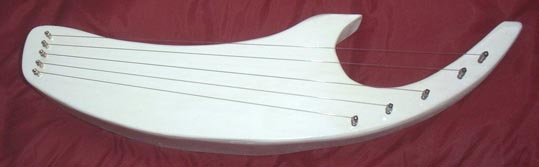
Here's Gerry's kantele that captures the look of the jawbone kantele. He sent it to me while I was at a writer's colony working on some of these stories. It was one of the most wonderful gifts I have received.

I have learned over the years, partly with the help of my first teacher, Kasha Breau, with whom I later played in a group called Louhi's Daughters with our friend Minna Popkin; then as a part of the Maine Kantele Workshop, where I learned an awful lot in a very short and intense time -- and made a lot of new friends as well as that kantele.

But as my pal Lani has noted, the kantele itself is an amazing teacher. With the five string it is not possible to play a wrong note, and you can learn much from just noodling on it. I'm no professional, but I love to play and will be doing so at my signing later this month.

One of the stories in Unikirja, simply entitled "The Kantele," demonstrates this magic. But when a little girl seems to develop a preternatural skill at playing the instrument, her mother begins to worry -- particularly as she seems to have also developed an invisible playmate...

Sunday, May 03, 2009

Branding Myself: Finnish

I'm trying to think about several angles for the "branding" idea, which I must admit still makes me a tad uncomfortable. I revile the forces of capitalist consumption in its may destructive forms, so I rebel at the idea of turning myself or my book into a product. However, I am well aware of the monumental task of finding the readers that are out there for any book, so I steel myself for the task and dive into this project with all the enthusiasm I can muster -- which for this book is a lot.

I'm very proud of my Finnish heritage and the reconnection with my roots that gave birth to this book. The problem, of course, as folks have pointed out, is that most people don't know much about Finland or the people who came from there in the 19th and 20th to settle the northern Midwest. What's the likely thing people think of?

Saunas!

Yes, that's why I chose this picture, which I found hilarious. Saunas are healthy. They're great ways to keep yourself clean. Before modern hospitals, they were the usual place for women to give birth. All kinds of traditions rose up around the sauna, from proper etiquette to magic.

What's that? Magic? Yep -- one of my stories in Unikirja, "Raising Lempi" a group of women practice an old ritual one learned from her grandmother for increasing their sexual attractiveness. I learned about this from my research and was quite intrigued with all the old magic connected with the sauna.

What else do you associate with Finland? Nokia? Lordi? President Halonen looking like Conan O'Brien? (My pal Ulla Suokko was in one of his fake ads!)

Saturday, May 02, 2009

Blog Tour

In an attempt to beef up my poor PR skills, I have joined a group that helps you develop a blog tour to promote your book. Of course, I want to promote Unikirja, but I'm a little uncertain about ways to do that well.

What's a blog tour? Instead of going out to various book stores or what not, you simply travel virtually from one blog to another. Like any kind of travel, it takes planning and coordination to go smoothly. Once it's set up, you try to get people to stop by -- offering them incentives of useful information and of course, free stuff. So, I'm adding a link on the side to all the folks who are doing the blog tour class together. Please drop by and check out their blogs.

One of the difficulties of this PR thing, is turning your work into a product. Given my book, it's a bit difficult because it's not a niche book. Finnish folklore? Myth? Legend? Magic? Spec Fic? A little bit of everything. In marketing, they talk a lot lately about "branding" (our new college website is all about the branding, hence the lack of flexibility).

So, what's my brand? Hell if I know. My first thought, "An acquired taste." Perhaps not as compelling as "It's The Real Thing" or "Finger-Lickin' Good." Guess I've got some work ahead of me. Suggestions welcome.