FUN WITH SLEDGEHAMMERS OR
"IN SEARCH OF THE SAMPO"
When did these filmmakers look into my dreams? I am, perhaps, one of a small number who form the ideal audience for this film that spins together Finnish mythology and wu xia action, but I’m sure its magic will appeal to a wide audience—if they can get over the strangeness of the concept.
Admittedly it sounds a bit esoteric: a mixture of the ancient Finnish story collection, THE KALEVALA, and the sword and sorcery of early China—with a little modern Helsinki life thrown in, too. The film opens on the provocative image of a woman with a lock tattooed on the back of her neck. We see her lover wrap his arms around her, then title cards begin to tell us of the ancient story of the Sampo, awkwardly translated on this Bonzai Media DVD as “the happiness bringing machine.”
Well, sort of.
The Sampo was the magic mill forged by the mythic smith Ilmarinen. Out one side it produced salt, out another flour and out the third side, gold. With refrigeration and various chemical preservatives, we forget how important salt has always been as a preservative. Flour—well, the bread is the life. Gold’s value is still clear to us. The point is the same. Everybody wanted it, everybody fought over it, and consequently, it was reduced to rubble.
Next there is the story of Loviatar from the 45th runo of THE KALEVALA. She’s the mother of the nine diseases, the last of which is too horrifying to even have a name (although later in the book, they’re defeated by the eternal sage, Väinämöinen—yes, it does begin to sound like a J.R.R. Tolkien saga; where do you think he got a lot of his ideas?). The filmmakers present this tale as an Chinese legend, however, where the ninth son is a demon so evil that he steals the Sampo.
This conflation is not as whimsical as it first appears. Many scholars have argued for an Asian connection to the story of the Sampo (the most accessible information in English can be found in Juha Pentikäinen’s KALEVALA MYTHOLOGY, Bloomington, Indiana: Indiana University Press, 1989). Although the Sang Fu [“Sampo”] Temple in Tibet turned out not to be the direct link many eager readers hoped for (see, for example, Helsingin Sanomat’s article “Was the Sampo in Tibet?” ), there is much to connect these seemingly disparate cultures. There may even be a rough parallel between Loviatar’s nine demon sons and the nine major dragons in Chinese mythology (or their nine children).
In the movie, this connection between the two cultures comes through most often in the stoic taciturnity of the characters who feel they must accept fate. There’s the abrupt Ronja (Krista Kosonen) who comes to Sang Fu, the antique shop, to unload the belongings of her ex, the morose blacksmith Kai (Tommi Eronen). We get voiceovers from the archaeologist Weckström (Elle Kull), but her quick eyes say more than her words. The only voluble talker is her partner, Berg (played by the delightful Markku Peltola, best known to American audiences as the nearly silent Man Without a Past in Aki Kaurismäki’s film of that name—I swear, the little plastic duck by Kai’s forge must be a nod to that master of filmmaking himself and his film HAMLET GOES BUSINESS, where the melancholy Dane is the scion of a rubber ducky-making business). Berg becomes convinced that Kai can open the mysterious metal box whose polygon shape his workshop echoes.
The two cultures are linked more directly through trips to the past in both ancient Finland and China. It takes longer to tell than it does to see it—there’s the 2000-year-old man clutching that iron box with Chinese lettering on top, then there are Iron Age Karelians meeting up with a wolf who has two warriors with consummate fighting skills on his heels. One of them is the lovely Jingchu Zhang (RUSH HOUR 3) who plays the titular warrior, Pin Yu. As details accrue, it becomes clear that we’re dealing with a narrative of reincarnation and of karmic checks and balances. While the enigmatic Berg taunts Kai into getting in touch with his mystic past as the descendent of the mythic smith, that past gradually begins to impinge on the present of all the characters, much to their surprise. Kai relives a past life when he was Sintai, the son of a smith with an appointment to meet a demon—until he gets sidetracked by the oldest story of all, love.
There’s an elegiac beauty to this film that its €2.5 million price tag would seem to make impossible. Yes, there’s digital enhancing, but a lot of the credit is due to the detailed vision of every scene and also to the fine cast, in particular Tommi Eronen, who seems to have done yeoman’s work getting in shape for both the smithing demands and the martial arts. While this is not the nonstop fight fest that many wu xia films become, the fight scenes work to direct conflict and add a poetic melancholy. Unlike Ang Lee, Annila understands that wiring should enhance the athleticism of a leap, not replace it. The visual aspects of the fights are well thought out, too, complementing the physical repartee with details like Zhang’s fan-like weapon and a variety of swords. In one scene, Eronen wields a kantele (the traditional Finnish lap-harp, also celebrated in THE KALEVALA) both for its plaintive music and for defense.
Not surprisingly, language plays a huge role in the story, requiring the Chinese actors to speak a few lines in Finnish and the Finnish actors to speak Mandarin. While there is some awkwardness involved on both sides, they do surprisingly well (although Eronen’s Mandarin sounds a little too deliberate and awkward at times). For most audience members in this country anyway, both languages will likely seem impenetrably exotic, but their blending does work as part of the thoughtful blend of cultures, myths and times. There was supposed to be an official Region 1 release in the works (no sign at IMDB though) but you can find it on Amazon and eBay; with luck this film will get to an audience who can appreciate its intricate mysteries, millennia-spanning romances and choreographed fights.
When’s the last time you saw a good sledgehammer fight anyway?
[NB: This originally appeared in Up Against the Wall, but I've trotted it out as I need to write about this film some more; plus I am lazy. And busy. So, nyeh!]
"The Wombat is a Joy, a Triumph, a Delight, a Madness!" ~ Dante Gabriel Rossetti
Showing posts with label kantele. Show all posts
Tuesday, July 26, 2011
Thursday, May 26, 2011
Publication: Finnish Charms
I had nearly forgotten about this: the Mythic Journeys folks have been going through some interesting transitions (which seems entirely appropriate) but the journal is back at last. I gave this paper at the Forging Folklore Conference at Harvard University in May 3-5 2007. Great conference! Peg and Hannah put together a terrific bunch of presenters including Ron Hutton (whom I teased about Kyrie whose voice always accompanied him on Historyonics), my mentors Steve Mitchell and Joe Harris, and the fabulous Byron, whom I met for the first time there. Before I gave the paper, I played the kantele and sang. Yes, me -- singing. I wasn't sure I'd do it until I opened my mouth. Good to do things that terrify you now and then. Love the image they chose.

Who say that music
Reckon that the kantele
was carved by Väinämöinen…
out of a great pike’s shoulders…
no, music was made from grief
molded from sorrow…
so my kantele will not
play, will not rejoice at all…
for it was fashioned from cares
moulded from sorrow.
My Kantele, Kanteletar 1:1
One of the least well known of modern reconstructions of folk magic must certainly be the realm of Baltic magic found in the ancient texts of Finland, but it has found a perhaps surprising popular resurgence in recent years. The reprinting of Kati Koppana’s Snakefat and Knotted Threads has brought a handbook of folk magic to a new generation of reconstructionists, but the nineteenth-century collections The Kalevala and The Kanteletar continue to provide a rich supply of magical practices. While originally the outgrowth of a rising sense of nationalism in nineteenth-century Finland, the two collections of myth and folklore also record a number of magical charms that give some insight into the ancient practices of the Finns, since lost in the (relatively) late conversion to Christianity and the long-practiced denigration of the indigenous tongues particularly by Swedish and then Russian political control...[read the rest and check out Anya's essay on Egypt, too]

Finnish Charms:
Appropriating Folk Magic from
the Kalevala and Kanteletar
By K.A. Laity
Kylä vuotti uutta kuuta,
miero päivän nousendoa.
Miepä vuotin minjoavani,
miepä vuotin minjovani.
The village waited for the new moon.
They said my brother would return
empty handed when he was off hunting.
They were wrong. The eagle caught the duck.
Värttinä, “Kylä vuotti uutta kuuta”
Truly they lie, they
Talk utter nonsenseWho say that music
Reckon that the kantele
was carved by Väinämöinen…
out of a great pike’s shoulders…
no, music was made from grief
molded from sorrow…
so my kantele will not
play, will not rejoice at all…
for it was fashioned from cares
moulded from sorrow.
My Kantele, Kanteletar 1:1
One of the least well known of modern reconstructions of folk magic must certainly be the realm of Baltic magic found in the ancient texts of Finland, but it has found a perhaps surprising popular resurgence in recent years. The reprinting of Kati Koppana’s Snakefat and Knotted Threads has brought a handbook of folk magic to a new generation of reconstructionists, but the nineteenth-century collections The Kalevala and The Kanteletar continue to provide a rich supply of magical practices. While originally the outgrowth of a rising sense of nationalism in nineteenth-century Finland, the two collections of myth and folklore also record a number of magical charms that give some insight into the ancient practices of the Finns, since lost in the (relatively) late conversion to Christianity and the long-practiced denigration of the indigenous tongues particularly by Swedish and then Russian political control...[read the rest and check out Anya's essay on Egypt, too]
Saturday, July 31, 2010
Advertisements for Myself
I'm beginning to doubt their usefulness and they seem to cause nothing but headaches in the making, yet here I go again: a general book trailer using my new "branding" concept, as developed in conversation on this blog: hard to spell, easy to read!
The music is courtesy of my friend Gerry Luoma Henkel, who built my first kantele, Louhi. Gerry makes amazing instruments and beautiful music; not surprisingly, he tells me some of his music is going to be be featured in a play as well as in a movie being made in Australia. I'm lucky to have so many talented people around me. When I ordered my kantele from Gerry, he even included a videotape that he had made to show me the basics and how to tune it. It was a big help! Kanteles are easy to play and have a gorgeous and soothing sound. Everyone should have one!
Today I will be heading off to MassMOCA for the Bang on Can marathon. After having my head down over work all week, it will be a nice change to empty my head of words and just listen to the music. And not thinking about things I wish I had done...
Saturday, December 12, 2009
Radio Wombat is Back!
Yes, after far too long I have made another itty bitty podcast for your delectation, part of a new series that wormed its way into my brain in the middle of the night. Yes, do take that as a caution.The series will be called "Conceit" (the literary kind, not the arrogant type although I suppose the habit of keeping blogs evidence enough of a kind of chutzpah) and the first one is called "Diva Soup" -- further warning I suppose. It features me playing Louhi, the ten string kantele.
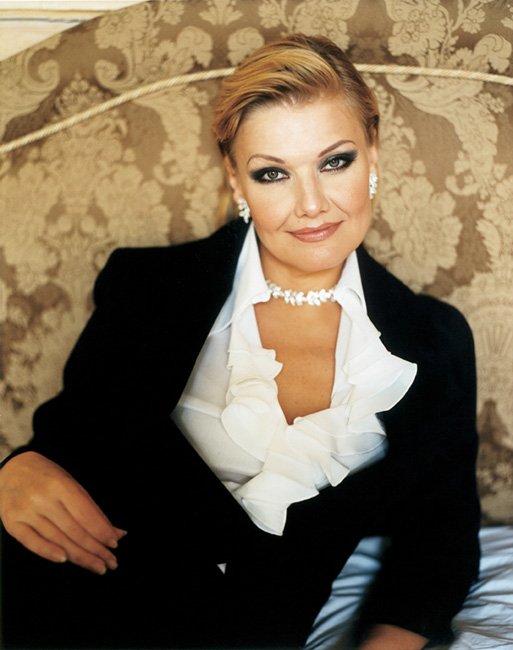
The lovely Karita Mattila, pictured left, has nothing whatsoever to do with the piece other than she is Finnish and a fabulous opera diva.
Labels:
humor,
kantele,
music,
podcasts,
weird stuff
Saturday, May 30, 2009
Signing: Eastline Books TODAY!
Yes, it all begins at noon: East Line Books, Old Village Plaza, 1714 Route 9, Clifton Park, NY 12065 (Just north of Rt. 146 on Rt. 9 across from Snyder's Restaurant, between Clifton Park Pizza and Captain's Treasures).I will be playing my kantele off and on -- and if that's not enough of a draw, Robyn is having a BIG SALE all weekend, so there are deals to be had!
So much to do before Monday -- I don't know how it will all get done, but it will have to be done. Nonetheless, this will be a welcome change from sitting in front of my computer or in the classroom (going to try to wrap up the story of the summer immersion tomorrow).
Sunday, May 17, 2009
Signing: Eastline Books May 30
Just a reminder for local people that I will be signing copies of Unikirja at Eastline Books in Clifton Park, NY on Saturday May 30th, beginning at noon. I will bring one of my kanteles to play and if there's any interest, maybe read a little. Author Lyn Miller-Lachmann will also be there signing her book, Gringolandia and the store will be having a big sale, too. All kinds of reasons to show up! Robyn's store is terrific and she really has a great selection. Support your local independent bookstores!
Friday, May 08, 2009
The Kalevala and Kanteletar
A doctor with a fascination for folklore, Elias Lönnrot set out to collect examples of the old tunes and stories that people told to try to capture what he saw as a vanishing way of life. In The Kalevala, he arranged these stories in runos to link together story arcs. You can read an English version online, but let me acquaint you with some of the recurring characters who show up in my stories.
Väinämöinen is the eternal sage. After Ilmatar the goddess gives birth to the world, he is the first human born. He knows all manner of magic. I've always found it fascinating that much of Finnish magic comes from know the true names of things and being able to sing them. At one point, Väinämöinen faces a young challenger who thinks he can take on the old man, but he gets sung right into a swamp. The panicky Joukahainen offers his sister's hand in marriage, which starts another theme for the old magician: he never gets the girl.
Aino is the sister offered to Väinämöinen. Her parents think it's an advantageous marriage, but the beautiful young maiden finds little appeal in being joined to the ancient sage and finally drowns herself to escape. She comes back, however, as a salmon to taunt Väinämöinen, so she lives again. Väinämöinen's mother suggests he should go north to find a bride instead.
Louhi is the witch of the northern lands. There's a great split in the Kalevala between the people of the south in Kaleva and those in the north, so they're always portrayed as adversaries. Louhi, while seemingly as powerful as Väinämöinen, inevitably the stories depict her as "evil" which just sat wrong with me. As you might guess from our name, Louhi's Daughters, my friends Minna and Kasha shared the opinion that we were getting a rather one-sided view of Louhi and in our performances we tried to give a more balanced picture of this amazing woman. Our very first performance together was a retelling of the Aino story, which also proved a resonant touchstone for Unikirja.
While The Kalevala has a series of narrative threads, The Kanteletar is a looser collection of songs grouped by who sings them, i.e. men, women or children. There are also a number of ballads that would be sung by everyone. Not surprisingly, one of the songs is all about the kantele. The name of the collection is kantele plus the feminine ending, so you might think of "Kanteletar" meaning the spirit of the kantele, the source of all the songs.
Tomorrow and Sunday, I'll offer a taste of these stories.
Wednesday, May 06, 2009
Playing Kantele
A rather utilitarian video of my playing, Little My, one of my five string kanteles. The instrument shows up many times in my short story collection, Unikirja.
Tuesday, May 05, 2009
My Kantele
What is the kantele? The short answer is the national instrument of Finland, a lap harp traditionally with five strings. Of course, that has changed much over the centuries: 5, 10 and 15-string kanteles are common (and often electric!) and there are even grand concert kanteles. Above is a picture of my very first kantele, Louhi, a 10-string made by the wonderful craftsman Gerry Henkel. That's our cat Kipper sitting in the case my dad made with just an outline of the instrument. It fits perfectly! I now have six kanteles, including one I built myself (with a lot of help).You can hear and see a kantele in this Kantele-TV video by Outi Sané (I helped edit the English subtitles). She explains a little more of the history, too.
In The Kalevala, Elias Lönnrot's collection of Finnish folklore (more about that very soon), we learn that the first kantele was made from the jawbone of a pike, with a maiden's hair for strings. When the ancient sage, Väinämöinen played it for the first time, not only did all the people stop and listen, but even all the forest creatures gathered, too, unable to tear themselves away from the magic in its strings.

Here's Gerry's kantele that captures the look of the jawbone kantele. He sent it to me while I was at a writer's colony working on some of these stories. It was one of the most wonderful gifts I have received.
I have learned over the years, partly with the help of my first teacher, Kasha Breau, with whom I later played in a group called Louhi's Daughters with our friend Minna Popkin; then as a part of the Maine Kantele Workshop, where I learned an awful lot in a very short and intense time -- and made a lot of new friends as well as that kantele.
But as my pal Lani has noted, the kantele itself is an amazing teacher. With the five string it is not possible to play a wrong note, and you can learn much from just noodling on it. I'm no professional, but I love to play and will be doing so at my signing later this month.
One of the stories in Unikirja, simply entitled "The Kantele," demonstrates this magic. But when a little girl seems to develop a preternatural skill at playing the instrument, her mother begins to worry -- particularly as she seems to have also developed an invisible playmate...
Monday, May 04, 2009
Signing: Eastline Books
Just a quick note to let you know that I will be doing a signing for Unikirja May 30th at Eastline Books in Clifton Park, NY. The fabulous Robyn Ringler hosts many events at her independent book store and it's a great place to browse -- in fact, she'll be having a big sale that day. I expect there will be a lot of walk-ins and will be playing my kantele to intrigue them.What's a kantele? That's tomorrow's topic (yes, it includes magic). In the meantime, off to the post office and then back to grading.
Wednesday, March 25, 2009
Kantele TV
(check the credits at the end, too :-)
Labels:
creativity,
Finnish,
folklore,
kantele,
music,
myth,
nature,
performance
Sunday, January 20, 2008
Ulla & Gerry
For your entertainment on a cold, cold Sunday (well, it is here), pal Gerry Henkel sends me the following video (that's one of his beautiful kanteles below):

A poetic collaboration by a Finnish poet, a Finnish expatriate performer, a Canadian Finnish videographer, and an American Finnish kantele player
Ulla Suokko, an expatriate Finnish citizen living in New York City, performs "Lapin Laulu," a poem written by Finnish native Tuovi Koivunen, with kantele accompaniment from North American Finn Gerry Henkel. This performance is excerpted from a video produced by Finnish Canadian Teuvo Hirvela taped at the Finnish Canadian festival “FinnFling” held in Thunder Bay, Ontario, Canada, July 14-16, 2006.
One morning of the festival, Gerry Henkel wandered into the art gallery area and met Rita Apuli who was featuring her original paintings from the book Louhen Kartanolla - a joint effort with poet Tuovi Koivunen who was also present in the gallery. Gerry then met Ulla Suokko and insisted that she meet Tuovi and Rita because he knew of her love of Finnish poems. Later in the day during one of Gerry's kantele performance, he asked Ulla to read one of the poems on stage while he played kantele. The video is the result. It illustrates how wonderful things can happen spontaneously in settings such as a Finnish summer festival.
The poem which Ulla performs is from Rita Apuli and Tuovi Koivunen's book, Louhen kartanolla [ISBN: 9529185081].
More information about Rita (and paintings from the book) can be found on her website. Tuovi Koivunen's website is here.
Ulla Suokko will be performing with her flamenco partner Carlos Revollar at Carnegie Hall in New York on February 10th. In July, Ulla will be participating in another Finnish North American festival: FinnFest in Duluth, Minnesota.
Thursday, December 27, 2007
Kantele Power

After looking at Gerry's video, I was curious to see what new kantele-themed clips might have been added lately and found this great video of some Finnish school kids playing Lordi's "Hard Rock Hallelujah" on kanteles. Wonderful! You can see the original Eurovision winning songsters' video here or (live at the contest here).
Subscribe to:
Posts (Atom)