"Who cares about Chekhov anyway? A bunch of old women moaning about ducks flying home to Moscow."
~ Withnail [Richard E. Grant] in Withnail & I
I am always grateful to the Spectrum 8 for hosting the NT Live performances; I'm also grateful that enough people in the Capital region attend them to make it lucrative. Keep up the good work! I need the lifeline.
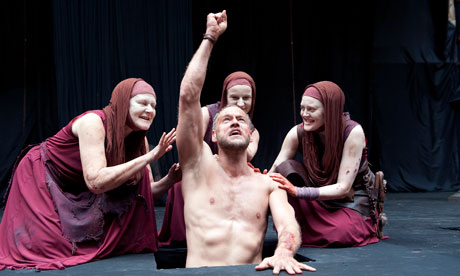
After sneaking off for a matinee of Harry Potter in the afternoon (bad girl! should have been working -- yes, it was fun), I headed back to the theater for the evening's broadcast. Strange to realise that this was in the Olivier Theatre: I was expecting the Lyttelton, where the production of The White Guard had been. Chekhov's been getting a lot more attention lately, so perhaps this is to be expected. The sets by Bunny Christie were as evocative as those for The White Guard and there was a brief behind-the-scenes featurette where she spoke about the design.
There was a fabulous cast (of course) headed by Zoë Wannamaker as Ranyevskaya, Charity Wakefield and Claudie Blakely as her daughters -- each coping with the dissolution of their familiar lives in different ways -- Conleth Hill as the merchant Lopakhin, who probably makes the most changes within the course of the drama and Mark Bonnar as the nascent revolutionary, Trofimov (who's name I cannot hear without thinking of Monty Python).
Everyone was terrific: Tim McMullan and Gerald Kyd provided a light touch of comic relief to break up the wistful sadness of Ranyevskaya and her family. The timing was perfect. The costuming, too, was exquisite --
-- and yet I'm just not won over to Chekhov. Maybe I'm just a Philistine or part of that audience "weaned on cinematic jump-cuts who like their irony on a plate." Or I just don't like Chekhov. I have tried before and still I'm more fond of the Gumby version than any other. At least it's brief. I can understand the impact of Chekhov's realism -- and landy, we've had a huge trend in that direction ever since -- but while I can see how it would be wonderful to act in his plays, I don't much enjoy watching them. I do like dark humour, but maybe just of a different kind (Finnish, not Russian). Or maybe I just need the right production. This one was superbly skillful, so I'm not sure what it would take.
"The Wombat is a Joy, a Triumph, a Delight, a Madness!" ~ Dante Gabriel Rossetti
Showing posts with label National Theatre. Show all posts
Wednesday, July 20, 2011
Tuesday, May 03, 2011
Frankenstein v Frankenstein
Check Todd's blog for other featured items in Tuesday's Overlooked A/V or add your own.
It was impossible to resist the urge to see both versions of the National Theatre's Frankenstein. Benedict Cumberbatch and Jonny Lee Miller rotated the central roles which was fascinating in itself, never mind the rest of the new script by Nick Dear. The new production, directed by Danny Boyle, focuses on the creature to a much greater extent, including a prolonged "birth" scene where he moves from first sentience through an accelerated childhood. It's a real showcase for the actor playing the role and where some of the differences in portrayal appear. Miller's creature was a more feral one, animalistic and somewhat more intimidating. Cumberbatch's seemed to center more on vulnerability (though they both did to a great extent) and discovery. In the pre-show interviews they both mentioned closely observing Miller's toddler Buster for inspiration. I didn't realise that the broadcast version was slightly different than what folks saw most nights on stage, but you can't have everything, eh?
The play has some great moments: the train run by people is a great visual but it gave me the expectation that more of the play would be impressionistic like that. The creature's development remains the focus, so we see his stay with the Laceys more vividly (though Felix's sister and wife have been combined O_o). Naomie Harris has a nice turn as Elizabeth, but there's not much for her to do here other than suffer the more explicit revenge of the creature. I loved how Cumberbatch in particular made Victor so arrogantly clueless. Miller's creator seemed more compassionate, although he was more awkward with Elizabeth. In both cases, it was thoroughly enjoyable and the final stark denouement in the frozen north both touching and grim. A great pair of nights out.
Check in your area for NT broadcasts: so worth it! Next up the fabulous Zoë Wanamaker in The Cherry Orchard. Of course I hope to catch a couple NT shows in London next month.
Tuesday, April 19, 2011
Converting Monks with Slides in San Antonio
I was hoping to have time to write up the NT Live Frankensteins I saw for Tuesday's Overlooked A/V but I'm still working on my presentation for PCA, so it's unlikely to happen. I did upload a version of my speech with the Powerpoint slides embedded (very hastily, so it's a bit clunky) so they will make a little more sense in context.
Converting Monks Into Friars With Slides
Monday, February 14, 2011
Review: Another Year & Fela!
In the middle of watching Mike Leigh's Another Year, I realised why I usually dislike mimetic films. The reality they purport to capture has nothing to do with their glossy interiors and shiny surfaces. Actors -- especially Hollywood actors -- do not look like they do in real life without the flattering lighting, makeup and carefully adjusted wardrobe. They do not look like us. Give me fantastical films that heighten reality or offer a completely new world! I'll buy the artifice. But tell me it's a "grittily realistic" slice o' life where a beautiful star gains a few pounds or wears glasses -- no, I don't care.
Which is why Leigh's films are such a delight. While British films in general seem to be increasingly permeated by plasticity like Hollywood, Leigh continues to cast people who look like human beings who have lived. We believe in Tom and Gerri (Kim Broadbent and Ruth Sheen), the long term couple who potter around their daily lives with seemingly little drama except that provided by others. The film opens with Gerri trying to reach a prospective therapy patient, played with heartbreaking, shattered, vulnerability by Imelda Staunton, then Tom the geologist at work on the latest intrusion of London clay currently filling the Victorian plumbing of the capital city. But the central image of the film as it moves through the four seasons is their garden at the allotment. Much of the pleasure and tenderness of their lives is spent there, speaking little but tending, always keeping an eye on things.
Obviously it's a metaphor for their marriage, but more so for their approach to relationships as a whole. They prod their son for news about his life, but never intrusively and he shows himself to have learned from their example. They put up with Gerri's colleague Mary, the neediest woman on the planet, but not without tag-teaming to deal with her fatiguing ways. They tut over their various friends' miseries and offer genuine help, but they're not willing to be dragged down by them either. Their friends like Mary, Ken and Tom's brother Ronnie find themselves miserable and confused, mostly because they're so self-centered. They don't tend their relationships, they don't concern themselves with anything outside themselves. When Mary, desperate for a relationship, finally has a small moment of connection, she can't really capitalise on it, because she doesn't really know how to connect. The pace of the film is leisurely, but you will enjoy the time spent with Tom and Gerri.
Fela! was the most recent of the National Theatre broadcasts at the Spectrum. Bill T. Jones' vision of the Afrobeat pioneer and self-styled Nigerian revolutionary Fela Kuti pulsates with rhythm and dance of course! Even if you know nothing about Kuti (I really only knew his big international hit, "Zombie") you will be enraptured by the music -- it's simply irresistible. I was particularly captivated by the beginning of the second half which started with a bunch of kalimbas being played. My colleague Dave Rice once opined that if everyone were issued their own thumb piano the world would be a more peaceful place: I agree. The rising and falling fortunes of the singer (Sahr Ngaujah) were tied to the death of his mother Funmilayo (Melanie Marshall) who had fought against the corrupt government and was eventually murdered. The play manages to introduce the audience to Afrobeat, to tell Kuti's story without pulling punches (he was no angel!) and uplift the audience despite a whole lot of tragedy. I found the journey to the orishas in the second half simply mesmerising. It was a treat for the whole cast -- and audience, too -- to have director/choreographer Jones join them on stage for the encore, shirtless and looking awfully youthful (and muscular) at sixty as they all danced more. With the interval, the show came to nearly three hours, yet it never dragged. Energizing!
Which is why Leigh's films are such a delight. While British films in general seem to be increasingly permeated by plasticity like Hollywood, Leigh continues to cast people who look like human beings who have lived. We believe in Tom and Gerri (Kim Broadbent and Ruth Sheen), the long term couple who potter around their daily lives with seemingly little drama except that provided by others. The film opens with Gerri trying to reach a prospective therapy patient, played with heartbreaking, shattered, vulnerability by Imelda Staunton, then Tom the geologist at work on the latest intrusion of London clay currently filling the Victorian plumbing of the capital city. But the central image of the film as it moves through the four seasons is their garden at the allotment. Much of the pleasure and tenderness of their lives is spent there, speaking little but tending, always keeping an eye on things.
Obviously it's a metaphor for their marriage, but more so for their approach to relationships as a whole. They prod their son for news about his life, but never intrusively and he shows himself to have learned from their example. They put up with Gerri's colleague Mary, the neediest woman on the planet, but not without tag-teaming to deal with her fatiguing ways. They tut over their various friends' miseries and offer genuine help, but they're not willing to be dragged down by them either. Their friends like Mary, Ken and Tom's brother Ronnie find themselves miserable and confused, mostly because they're so self-centered. They don't tend their relationships, they don't concern themselves with anything outside themselves. When Mary, desperate for a relationship, finally has a small moment of connection, she can't really capitalise on it, because she doesn't really know how to connect. The pace of the film is leisurely, but you will enjoy the time spent with Tom and Gerri.
Fela! was the most recent of the National Theatre broadcasts at the Spectrum. Bill T. Jones' vision of the Afrobeat pioneer and self-styled Nigerian revolutionary Fela Kuti pulsates with rhythm and dance of course! Even if you know nothing about Kuti (I really only knew his big international hit, "Zombie") you will be enraptured by the music -- it's simply irresistible. I was particularly captivated by the beginning of the second half which started with a bunch of kalimbas being played. My colleague Dave Rice once opined that if everyone were issued their own thumb piano the world would be a more peaceful place: I agree. The rising and falling fortunes of the singer (Sahr Ngaujah) were tied to the death of his mother Funmilayo (Melanie Marshall) who had fought against the corrupt government and was eventually murdered. The play manages to introduce the audience to Afrobeat, to tell Kuti's story without pulling punches (he was no angel!) and uplift the audience despite a whole lot of tragedy. I found the journey to the orishas in the second half simply mesmerising. It was a treat for the whole cast -- and audience, too -- to have director/choreographer Jones join them on stage for the encore, shirtless and looking awfully youthful (and muscular) at sixty as they all danced more. With the interval, the show came to nearly three hours, yet it never dragged. Energizing!
Wednesday, January 12, 2011
Review: Hamlet
I am eternally grateful for the NT Live broadcasts; they bring a little bit of the London theatre experience to the (currently) frozen north, which seems so far from the city of my heart. Thank you, Spectrum 8 for hosting the broadcasts, even if Monday night's show seemed to have its share of technical difficulties, including some on-screen monkeying with the display. Hard not to call out, "No, not resolution! position!"
I'd heard great things about this production of Hamlet from the start. I'd seen Rory Kinnear in other productions at the NT and had been impressed with him, but hadn't really thought of him as a Hamlet. He fits perfectly into Hytner's vision of Denmark as police state where everyone's under constant surveillance. Hamlet, far from being a pampered prince, seems to be a confused young man mourning a father he admired and idealised. Patrick Malahide plays his uncle/stepfather as a cold and calculating bureaucrat; Clare Higgins plays his mother as a weak woman with a drink always to hand. When Hamlet speaks of how her first husband cossetted her, we see that weakness and a fear of being alone. I loved how Polonius (David Calder) is not the buffoon he's usually played to be: there's something almost chilling about him, though sometimes he pauses as if realising all at once what he's doing to his own children. His cruelty to Ophelia in particular is sharp here.
Ruth Negga, who was so lovely as Aricia in Phèdre, plays Ophelia with affecting vulnerability, goofing with her brother while their father reels off his advice, then naïvely meeting with Hamlet and guiltily giving the game away (the bible she reads has a hidden mic inside). When mad, she pushes a shopping cart across the stage like a street person though tracked yet by two of her father's staff. In an exquisitely chilling moment, Hytner has her pushed out the door by the security guys. She's become too embarrassing, so she gets bumped off.
David Calder doubles as the gravedigger, a good choice to show him as affable as Polonius was creepy. James Laurensen doubles as the Ghost and the Player King, also a nice pairing. Giles Terera's Horatio didn't seem to be quite the confidante the character normally is, though his regard for Hamlet came across clearly. The atmosphere of paranoia affects all the relationships, which gives a new reading to the dialogue -- which is everything you hope for with Shakespeare. It helped bring out the machinations of Fortinbras better as well, which is seldom done well.
But Kinnear really was a wonder. The first few lines, his delivery seemed almost too clipped and arch, but it worked. In the first speech he's conveying his anger and betrayal. Throughout Kinnear presents the lines as if they were thoughts arising from his head, not "speeches" written down. It's hard: even people who've never seen a Shakespeare play know "To be, or not to be." I get impatient with actorly excesses: Kinnear gave an utterly natural performance -- especially so when Hamlet is conscious of performing as he puts that "antic disposition" on and overplays. Hamlet is trying to figure out what's real and what's not, and like so many people, sometimes it's the loss of things that makes him realise what matters most. It's a wonderful process of discovery in this production.
The only real disappointment -- it's a stellar cast, the sets wonderful, everything really moved along despite the three and a half hour length -- was Patrick Malahide. At times it looked like he might have been reading off a prompter as he stared too fixedly in the same direction. I know he can be fantastic. I saw him with Jeremy Irons in Embers, where he spends most of the play listening to Irons' character, yet he seemed every bit as present as Irons. Maybe it was an off night. I loved this. I wish I could see it again. Maybe they'll put it out on DVD. I hope so.
And yes, you can buy the t-shirt :-)
I'd heard great things about this production of Hamlet from the start. I'd seen Rory Kinnear in other productions at the NT and had been impressed with him, but hadn't really thought of him as a Hamlet. He fits perfectly into Hytner's vision of Denmark as police state where everyone's under constant surveillance. Hamlet, far from being a pampered prince, seems to be a confused young man mourning a father he admired and idealised. Patrick Malahide plays his uncle/stepfather as a cold and calculating bureaucrat; Clare Higgins plays his mother as a weak woman with a drink always to hand. When Hamlet speaks of how her first husband cossetted her, we see that weakness and a fear of being alone. I loved how Polonius (David Calder) is not the buffoon he's usually played to be: there's something almost chilling about him, though sometimes he pauses as if realising all at once what he's doing to his own children. His cruelty to Ophelia in particular is sharp here.
Ruth Negga, who was so lovely as Aricia in Phèdre, plays Ophelia with affecting vulnerability, goofing with her brother while their father reels off his advice, then naïvely meeting with Hamlet and guiltily giving the game away (the bible she reads has a hidden mic inside). When mad, she pushes a shopping cart across the stage like a street person though tracked yet by two of her father's staff. In an exquisitely chilling moment, Hytner has her pushed out the door by the security guys. She's become too embarrassing, so she gets bumped off.
David Calder doubles as the gravedigger, a good choice to show him as affable as Polonius was creepy. James Laurensen doubles as the Ghost and the Player King, also a nice pairing. Giles Terera's Horatio didn't seem to be quite the confidante the character normally is, though his regard for Hamlet came across clearly. The atmosphere of paranoia affects all the relationships, which gives a new reading to the dialogue -- which is everything you hope for with Shakespeare. It helped bring out the machinations of Fortinbras better as well, which is seldom done well.
But Kinnear really was a wonder. The first few lines, his delivery seemed almost too clipped and arch, but it worked. In the first speech he's conveying his anger and betrayal. Throughout Kinnear presents the lines as if they were thoughts arising from his head, not "speeches" written down. It's hard: even people who've never seen a Shakespeare play know "To be, or not to be." I get impatient with actorly excesses: Kinnear gave an utterly natural performance -- especially so when Hamlet is conscious of performing as he puts that "antic disposition" on and overplays. Hamlet is trying to figure out what's real and what's not, and like so many people, sometimes it's the loss of things that makes him realise what matters most. It's a wonderful process of discovery in this production.
The only real disappointment -- it's a stellar cast, the sets wonderful, everything really moved along despite the three and a half hour length -- was Patrick Malahide. At times it looked like he might have been reading off a prompter as he stared too fixedly in the same direction. I know he can be fantastic. I saw him with Jeremy Irons in Embers, where he spends most of the play listening to Irons' character, yet he seemed every bit as present as Irons. Maybe it was an off night. I loved this. I wish I could see it again. Maybe they'll put it out on DVD. I hope so.
And yes, you can buy the t-shirt :-)
Wednesday, November 10, 2010
Review: A Disappearing Number and The Real Inspector Hound
The National Theatre live broadcast of A Disappearing Number proved to be a stunning experience. A heady mix of drama, math, physics, love, romance, ritual, music, classical Indian dance and rhythms -- it sounds too complicated to work, but it does. In fact, it's kind of magical. Put together by the theatre company Complicite, this production explained a lot of complicated math, but weaved it together with a love story, a history lesson, an explanation of the beauty of numbers and their patterns, an insightful examination of the situation for an Indian in Britain before the first world war and the ways we build our own private languages of love.
It sounds like an awkward jigsaw puzzle of clashing pieces: yet it was over two hours of non-stop dazzle of ideas, characters, ritual and movement. This is the kind of piece that shows all theatre can be, how it can be so much more than a story unfolding on stage before an audience. It was exciting, it was enthralling and it was inspiring. Thank you, Spectrum 8 for carrying the broadcasts; thank you, National Theatre for broadcasting these productions; thank you Complicite for visionary theatre; thank you to a talented cast and crew for a spellbinding experience.
Sunday was the last performance of Stoppard's The Real Inspector Hound at Shakespeare & Co. As one of Stoppard's early plays, it's more about playful and clever fun than about weighty issues, though there's an underlying almost hysterical theme of anxiety about the elasticity of reality as the observers get dragged into the play they're observing. This element, however, became completely buried with the focus on physical humor.
Directed by actor Jonathan Croy, the cast made the most of the opportunities for slapstick wackiness, even making the dementedly brilliant choice to have the charwoman, Mrs. Drudge, be blind. The actors had a ball. Moon and Birdboot, the two critics reviewing the play and talking through it, were sitting next to us in the first row stage left. It really invited audience interaction, which happened, including a young man telling the two troublemakers at the end of the interval that he hoped they would be less disruptive in the second half.
Second half: that was the problem. This is a one act play. All the slapstick inserts helped stretch it to two hours with an interval. You could really feel the stretching in the first half. Stoppard's dialogue suits a snappy pacing that ties the moments together. All the inserted bits subsumed the dialogue. The physical humor clearly pleased the audience and the actors seemed to be having a ball. It was fun, and I was probably the only one chafing at the slackness of the pace. The set pieces like the card games and the tea service were funny, but also brought the story to a standstill, so it had to start up again and pick up speed once more. They may have decided that a one-act would not leave an audience feeling as if it got its money's worth; when the Home Made Theatre Company put it on, they added The Fifteen Minute Hamlet, which made a nice addition to the production. Great fun.
By the by, I got my contributor's copy of this so I conclude it's available now. The volume includes my essays "The Gilda Stories" and "The Vampire Lifestyle":
It sounds like an awkward jigsaw puzzle of clashing pieces: yet it was over two hours of non-stop dazzle of ideas, characters, ritual and movement. This is the kind of piece that shows all theatre can be, how it can be so much more than a story unfolding on stage before an audience. It was exciting, it was enthralling and it was inspiring. Thank you, Spectrum 8 for carrying the broadcasts; thank you, National Theatre for broadcasting these productions; thank you Complicite for visionary theatre; thank you to a talented cast and crew for a spellbinding experience.
Sunday was the last performance of Stoppard's The Real Inspector Hound at Shakespeare & Co. As one of Stoppard's early plays, it's more about playful and clever fun than about weighty issues, though there's an underlying almost hysterical theme of anxiety about the elasticity of reality as the observers get dragged into the play they're observing. This element, however, became completely buried with the focus on physical humor.
Directed by actor Jonathan Croy, the cast made the most of the opportunities for slapstick wackiness, even making the dementedly brilliant choice to have the charwoman, Mrs. Drudge, be blind. The actors had a ball. Moon and Birdboot, the two critics reviewing the play and talking through it, were sitting next to us in the first row stage left. It really invited audience interaction, which happened, including a young man telling the two troublemakers at the end of the interval that he hoped they would be less disruptive in the second half.
Second half: that was the problem. This is a one act play. All the slapstick inserts helped stretch it to two hours with an interval. You could really feel the stretching in the first half. Stoppard's dialogue suits a snappy pacing that ties the moments together. All the inserted bits subsumed the dialogue. The physical humor clearly pleased the audience and the actors seemed to be having a ball. It was fun, and I was probably the only one chafing at the slackness of the pace. The set pieces like the card games and the tea service were funny, but also brought the story to a standstill, so it had to start up again and pick up speed once more. They may have decided that a one-act would not leave an audience feeling as if it got its money's worth; when the Home Made Theatre Company put it on, they added The Fifteen Minute Hamlet, which made a nice addition to the production. Great fun.
By the by, I got my contributor's copy of this so I conclude it's available now. The volume includes my essays "The Gilda Stories" and "The Vampire Lifestyle":
Wednesday, October 13, 2010
Review: Phèdre
Despite being exhausted by Albacon, I decided to head out to the Spectrum Monday night with my pals Ron and Peg because they were rebroadcasting Helen Mirren's star turn in Ted Hughes' translation of Racine's Phèdre at the National Theatre in London. I was sighing from the get go: they had a new introduction from one of the execs at NT, who was speaking from somewhere up high, so you could see Waterloo Bridge and the Southbank Centre in the background across the Thames.
I miss London so much :-(
But the production at the Lyttleton (the medium size of the three stages) quickly made me forget about London as it thrust us back to ancient Greece and the illicit longings of the queen for her stepson, Hippolytus, played by the smoldering Dominic Cooper. It's amazing to think how much fear and disgust an older woman's sexuality can still arouse (hence the existence of the disparaging term "cougar"). In the play, it brings down a nation.
The absolutely gorgeous Ruth Negga plays Aricia, the true love of Hippolytus and the rival to power in the vacuum created by the supposed death of Theseus. The only other older woman, Oenone, played by the always amazing Margaret Tyzack, proves to be scheming and trouble-making even more so than her queen, condemning them all in this tragedy by her maneuverings. John Schrapnel as Théramène, not only has to act as wise adviser to Hippolytus, but also has to relate a tragic death that happens off-stage (as is normal for Greek drama). Schrapnel brought the audience to tears with his moving re-enactment with just words and gestures. The real power of theatre.
The only weak link was Stanley Townsend's Theseus; perhaps he was having an off night, because at times he seemed to capture the magic that the others made look effortless, but all too often his movements and speech fell flat, losing that fragile connection to the imitation of life. A pity.
I love the NT and I am really grateful that the Spectrum 8 carries their broadcasts -- really looking forward to the Hamlet with Rory Kinnear and Danny Boyle's Frankenstein.
I miss London so much :-(
But the production at the Lyttleton (the medium size of the three stages) quickly made me forget about London as it thrust us back to ancient Greece and the illicit longings of the queen for her stepson, Hippolytus, played by the smoldering Dominic Cooper. It's amazing to think how much fear and disgust an older woman's sexuality can still arouse (hence the existence of the disparaging term "cougar"). In the play, it brings down a nation.
The absolutely gorgeous Ruth Negga plays Aricia, the true love of Hippolytus and the rival to power in the vacuum created by the supposed death of Theseus. The only other older woman, Oenone, played by the always amazing Margaret Tyzack, proves to be scheming and trouble-making even more so than her queen, condemning them all in this tragedy by her maneuverings. John Schrapnel as Théramène, not only has to act as wise adviser to Hippolytus, but also has to relate a tragic death that happens off-stage (as is normal for Greek drama). Schrapnel brought the audience to tears with his moving re-enactment with just words and gestures. The real power of theatre.
The only weak link was Stanley Townsend's Theseus; perhaps he was having an off night, because at times he seemed to capture the magic that the others made look effortless, but all too often his movements and speech fell flat, losing that fragile connection to the imitation of life. A pity.
I love the NT and I am really grateful that the Spectrum 8 carries their broadcasts -- really looking forward to the Hamlet with Rory Kinnear and Danny Boyle's Frankenstein.
Wednesday, July 28, 2010
Theatre Round-Up
I've been lucky enough to have some great theatre outings in the last few weeks, but I've been short on time to talk about them. I slipped off to Massachusetts to visit Shakespeare & Co and catch both The Comedy of Errors and Richard III. The former was in the Bernstein Theatre with the troupe of interns. They had a circus theme which fit the wacky mix-ups well. I always find it fascinating to see the creative ways companies adjust to small spaces and small casts. They even employed a dressmaker's dummy for one of the characters because the actor had to play two parts in the climactic scene. Great fun.
Richard III was still in previews, so the director reminded us that things were still in flux. I had a seat up on the side hanging over the stage (yes, already a hot ticket in previews) and so I ended up having to move aside during the scene where Richard pretends to eschew the crown a few times before 'reluctantly' accepting it. He and his entourage leaned over the balcony to the crowd below. They whipped up the audience response so we were all cheering for Richard, thus complicit in the events. A good technique. John Douglas Thompson made for an energetic villain, but one of the things that really came out of this production was a clear image of the women who were ignored and pushed aside by these nakedly ambitious men. The first scene with Anne really makes or breaks the play -- we have to believe that this monster can charm -- and it came off beautifully. Terrific cast and much glorious mayhem.
One of the things that helps me miss London a little less is the wonderful NT Live broadcasts. This time around it was London Assurance, which I hadn't managed to see while I was there. The broadcasts give you the feeling of being in the theatre, but also the close interaction zooming cameras allow. I am soooo grateful The Spectrum is participating in the project. The play is a HOOT. I knew nothing about Dion Boucicault, the 19th century Irish playwright, but this was a terrifically funny farce. Stars Simon Russell Beale and Fiona Shaw were just loving every minute of their over-the-top roles; the entire cast was superb, even when the part wasn't enormous, like Nick Sampson as the gentleman's valet Cool. And what a delight to see Richard Briers! The performance was sold out, so they broadcast the play outside the NT on the "grass" (the astroturfed area where the giant furniture usually sits in the summer time) and the cast ran out to take a bow there at the end as well. Sheer delight.
Then the other day was a quick trip up to Saratoga Springs for Shakespeare in the Park. My theatre buddy Ron and I were looking forward to Hamlet, but I was also looking forward to some barbecue at PJ's as it had been ages since I'd had any -- yum! Oh, their ribs and all the sauces. Mmmmm. And the play was much fun, too. It took me a little while to warm up to the Hamlet (who sounded more like he was a lost Belushi brother than a Dane) but most of the rest of the cast was good and there were some interesting choices in staging, like having the ghost return at the end to help Claudius meet his end. Timing was good, too; the play finished just as the mosquitoes began to make themselves known. It was a slimmed down production, but the cuts didn't feel too drastic (unsurprisingly, no Fortinbras at the end).
I'm crazy busy with some expected and unexpected deadlines this week, but I'm already trying to figure out when I can make it back to Shakespeare & Co for The Winter's Tale. They're doing some Stoppard this fall, too, so hurrah.
Richard III was still in previews, so the director reminded us that things were still in flux. I had a seat up on the side hanging over the stage (yes, already a hot ticket in previews) and so I ended up having to move aside during the scene where Richard pretends to eschew the crown a few times before 'reluctantly' accepting it. He and his entourage leaned over the balcony to the crowd below. They whipped up the audience response so we were all cheering for Richard, thus complicit in the events. A good technique. John Douglas Thompson made for an energetic villain, but one of the things that really came out of this production was a clear image of the women who were ignored and pushed aside by these nakedly ambitious men. The first scene with Anne really makes or breaks the play -- we have to believe that this monster can charm -- and it came off beautifully. Terrific cast and much glorious mayhem.
One of the things that helps me miss London a little less is the wonderful NT Live broadcasts. This time around it was London Assurance, which I hadn't managed to see while I was there. The broadcasts give you the feeling of being in the theatre, but also the close interaction zooming cameras allow. I am soooo grateful The Spectrum is participating in the project. The play is a HOOT. I knew nothing about Dion Boucicault, the 19th century Irish playwright, but this was a terrifically funny farce. Stars Simon Russell Beale and Fiona Shaw were just loving every minute of their over-the-top roles; the entire cast was superb, even when the part wasn't enormous, like Nick Sampson as the gentleman's valet Cool. And what a delight to see Richard Briers! The performance was sold out, so they broadcast the play outside the NT on the "grass" (the astroturfed area where the giant furniture usually sits in the summer time) and the cast ran out to take a bow there at the end as well. Sheer delight.
Then the other day was a quick trip up to Saratoga Springs for Shakespeare in the Park. My theatre buddy Ron and I were looking forward to Hamlet, but I was also looking forward to some barbecue at PJ's as it had been ages since I'd had any -- yum! Oh, their ribs and all the sauces. Mmmmm. And the play was much fun, too. It took me a little while to warm up to the Hamlet (who sounded more like he was a lost Belushi brother than a Dane) but most of the rest of the cast was good and there were some interesting choices in staging, like having the ghost return at the end to help Claudius meet his end. Timing was good, too; the play finished just as the mosquitoes began to make themselves known. It was a slimmed down production, but the cuts didn't feel too drastic (unsurprisingly, no Fortinbras at the end).
I'm crazy busy with some expected and unexpected deadlines this week, but I'm already trying to figure out when I can make it back to Shakespeare & Co for The Winter's Tale. They're doing some Stoppard this fall, too, so hurrah.
Monday, June 28, 2010
The Scottish Play, the Russian Play and Lowe in Basingstoke
Ah, it's always fun to hit the Globe; I had missed their Macbeth earlier, so was glad to have a chance to catch it before it ended. The staging was a bit more elaborate than the usual plain stage: there was a double ring with chains and drapery over the stage, and a kind of bib stretching out from the stage itself, which had holes cut in it to allow the mostly young groundlings to put their heads through. It also allowed the three witches (pictured left) to sneak up behind them and make them shriek. This set the tone: it was a gruesomely bloody production that emphasized the violence. I liked that the witches were always around, so you had more of a sense of their orchestrating all the events. A very enjoyable production that seldom lagged.
Another stop at the NT is hard to resist when they have the Travelx £10 tickets. I had already seen the set for Mikhail Bulgakov's The White Guard during the back stage tour and was looking forward to seeing it in action. I had no idea that there were a few sets between which the action switched. The main location, the Turbin's home, was a wonderful evocation of early 20th century Russia, but I had no idea how quickly the entire set could roll away and be replaced with succeeding sets, even an underground bunker. Bulgakov's play deals with the horrors of war and its pointlessness, but with a great deal of humour and tenderness as well as anger. Very enjoyable. Even more enjoyable was coming out of the theatre in the midst of the England-Slovenia match, so the streets were completely empty and there was no traffic to fight while cycling through Waterloo. Whoo hoo!
Thursday was Basingstoke and Nick Lowe. His opening act was part of his band: Geraint Watkins. The good-natured singer and keyboardist ambled through a few songs accompanied by clarinet and saxophonist Martin Willing (I think?) that really pleased the audience. Later Lowe dueted with Watkins on "Only a Rose." Lowe was his usual low key self with the big shock of white hair and thick horn-rimmed glasses. He hit songs old and new like the yearning "Long Limbed Girl" and "I Trained Her to Love Me" (which he called "evil") from At My Age and older songs like acoustic versions of "Heart" and "The Beast in Me" as well as a really romping version of "I Knew the Bride" and wonderfully moving rendition of "What's so Funny 'bout Peace Love and Understanding?" Wonderful show -- worth the trip!
Yesterday, of course, was the disastrous loss of the England team, or as the Express headline I saw on the Tube said, "YOU LET YOUR COUNTRY DOWN." Worse, I lost £10 betting on them and Germany was just a much much better team. At least I got treated to a drink to make up for losing :-)
It's outrageously hot in London. I cam back in the middle of the afternoon and took a bath I felt so grotty. Where are my grey skies and cool breezes?
Another stop at the NT is hard to resist when they have the Travelx £10 tickets. I had already seen the set for Mikhail Bulgakov's The White Guard during the back stage tour and was looking forward to seeing it in action. I had no idea that there were a few sets between which the action switched. The main location, the Turbin's home, was a wonderful evocation of early 20th century Russia, but I had no idea how quickly the entire set could roll away and be replaced with succeeding sets, even an underground bunker. Bulgakov's play deals with the horrors of war and its pointlessness, but with a great deal of humour and tenderness as well as anger. Very enjoyable. Even more enjoyable was coming out of the theatre in the midst of the England-Slovenia match, so the streets were completely empty and there was no traffic to fight while cycling through Waterloo. Whoo hoo!
Thursday was Basingstoke and Nick Lowe. His opening act was part of his band: Geraint Watkins. The good-natured singer and keyboardist ambled through a few songs accompanied by clarinet and saxophonist Martin Willing (I think?) that really pleased the audience. Later Lowe dueted with Watkins on "Only a Rose." Lowe was his usual low key self with the big shock of white hair and thick horn-rimmed glasses. He hit songs old and new like the yearning "Long Limbed Girl" and "I Trained Her to Love Me" (which he called "evil") from At My Age and older songs like acoustic versions of "Heart" and "The Beast in Me" as well as a really romping version of "I Knew the Bride" and wonderfully moving rendition of "What's so Funny 'bout Peace Love and Understanding?" Wonderful show -- worth the trip!
Yesterday, of course, was the disastrous loss of the England team, or as the Express headline I saw on the Tube said, "YOU LET YOUR COUNTRY DOWN." Worse, I lost £10 betting on them and Germany was just a much much better team. At least I got treated to a drink to make up for losing :-)
It's outrageously hot in London. I cam back in the middle of the afternoon and took a bath I felt so grotty. Where are my grey skies and cool breezes?
Wednesday, June 23, 2010
Zombie Land
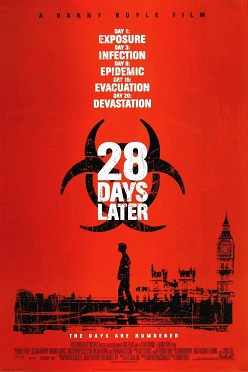
I came out of The White Guard today, hopped on my bike and thought I had landed in 28 Days Later. I had misgivings about the Waterloo roundabout, always an insane mess of cars, bikes and other vehicles and there was --
no one.
I have never seen the streets of London so empty (at least not since the zombie flick). Yeah, it was the England v Slovenia match of the World Cup. I cycled off to meet a friend at the Black Prince, where we had a beer before the crowds started gathering for the next match (Germany v Ghana). Who knew there were so many Germans in south London? They came to the Black Prince because "the other German pub was full." Har!
Reviews of the Russian play and the Scottish one to come --
no one.
I have never seen the streets of London so empty (at least not since the zombie flick). Yeah, it was the England v Slovenia match of the World Cup. I cycled off to meet a friend at the Black Prince, where we had a beer before the crowds started gathering for the next match (Germany v Ghana). Who knew there were so many Germans in south London? They came to the Black Prince because "the other German pub was full." Har!
Reviews of the Russian play and the Scottish one to come --
Friday, June 11, 2010
BitchBuzz: Women Beware Women
My latest column for BitchBuzz is another theatre review:
As always, read the rest at BBHQ. I ought to have an additional piece up very soon as I attended another launch for BB yesterday with celebrities both planned and unexpected. All to be revealed soon, but now I need some more tea.
"Men buy their slaves, but women buy their masters." – Isabella
Shakespeare gets all the love when it comes to Elizabethan theatre, but that's because people tend to forget that the stage was the television of its time, cheap and plentiful, aiming only to get bums on benches and crowds in the yard. They were up against bear baiting and the groundlings cried for more jokes and more violence. One of the crowd pleasers getting revived of late is Thomas Middleton.
Women Beware Women is a great example of Middleton's work. Like last years' The Revenger's Tragedy, the National Theatre gives Middleton an enthusiastic outing that makes the most of his brutal phantasmagoria. Marianne Elliott directs the production with a kind of gleeful decadence (why is it that there are more women directors at the NT than on the whole of Broadway?).
Loosely based on some of the Medici family goings-on, the plot is a bit complicated: trying to summarize it to a friend, I quickly saw his eyes glaze over...
Shakespeare gets all the love when it comes to Elizabethan theatre, but that's because people tend to forget that the stage was the television of its time, cheap and plentiful, aiming only to get bums on benches and crowds in the yard. They were up against bear baiting and the groundlings cried for more jokes and more violence. One of the crowd pleasers getting revived of late is Thomas Middleton.
Women Beware Women is a great example of Middleton's work. Like last years' The Revenger's Tragedy, the National Theatre gives Middleton an enthusiastic outing that makes the most of his brutal phantasmagoria. Marianne Elliott directs the production with a kind of gleeful decadence (why is it that there are more women directors at the NT than on the whole of Broadway?).
Loosely based on some of the Medici family goings-on, the plot is a bit complicated: trying to summarize it to a friend, I quickly saw his eyes glaze over...
As always, read the rest at BBHQ. I ought to have an additional piece up very soon as I attended another launch for BB yesterday with celebrities both planned and unexpected. All to be revealed soon, but now I need some more tea.
Thursday, June 10, 2010
Review: After the Dance + NT backstage tour
I love the NT! What could it be? Their wide variety of programming? Plays old and new? More female directors in this single building than on the whole of Broadway? So many reasons!
I found yet another reason when I took their backstage tour. Yes, I am so enamoured of theatre life that it was bound to be fun. Plus I got previews of the two productions I was going to see this week. Although it was the dinner break for most of the crew, there were a few people around including some of the actors warming up.
First stop was the Olivier, their largest theatre. The set for Women Beware Women was on stage and they were doing the sound check for the evening's performance. Our guide explained how in addition to turning the set around, the giant cylinder can also bring up an entire set from below while taking another down in a sort of corkscrew movement. There are over a thousand lights, some fixed, some programmable, and sight lines are fixed at 118° which matches the sight lines of the human eye, the slope of the seats making sure no one ever blocks your view (though I find it does make me knees a little wobbly looking down).
The Lyttleton is a more traditional theatre, but the proscenium can rise and lower and the sides as well, so it can be widescreen or not. The set for After the Dance was up and a few tech people were testing things out, as it's still in previews. We went back stage and there were still sets for The Habit of Art, Alan Bennett's latest play, which I'd seen via simulcast just before I left for London. Everything was modular so it could be moved in and out easily. There are up to three plays rotating on all three stages at any given time -- amazing! We went around directly behind the stage where the set for The White Guard sits, wonderfully evoking turn of the century Russia in the winter -- there's even a real spruce for the Christmas tree. The entire set rolls forward and then gets lowered onto the stage. Quite ingenious.
In the tiny Cottesloe, actors were warming up on stage, but our guide said they were all right with our trooping in to take a peek. I haven't been to a production in this little black box theatre, so I'm looking forward to doing so soon. Not only can the stage be reconfigured, but the seats as well. Behind the scenes, we saw the boxes of the horses from War Horse packed to be shipped to Broadway, and a giant portrait of Olivier hangs in the narrow but very long corridor between all the workshops. Among the props were things like a bloodied head and a few turtles. In the huge paintshop the floor for Moira Buffini's new play, Welcome to Thebes, were newly painted and partially assembled. The huge backdrop painted like a grey sky hung across the walls. Amazing that there's that much space.
After the tour, it was time for After the Dance and its decadence between the wars, when the sparkle of the Bright Young Things has lost most of its lustre. Thea Sharrock directs a stellar cast in Rattigan's play which allow individuals to emerge from the types and shifts our sympathies as layers are gradually revealed, even in people steadfastly determined to have only a shiny surface. Hildegard Bechtler's set effortlessly reproduces sumptuous but tasteful wealth.
We're introduced to the Scott-Fowler home by the absence of its central figure, David (Benedict Cumberbatch), who's sleeping off the effects of yet another of the endless parties. His cousin, Peter (John Heffernan), a poor relation who's paid to be a secretary for the history he's supposedly writing. His disapproval of his cousin's life comes out in conversation with John Reid, a sort of professional hanger-on played by the always wonderful Adrian Scarborough. David's wife Joan (Nancy Carroll), tries to dismiss Peter's concerns, but when Peter's fiancée, Helen (Faye Castelow) arrives with her doctor brother, it soon becomes clear that David is far worse off than a mere hangover -- and that Helen is completely smitten with him.
It's wonderful to see the ways that various characters figure it out. David is nearly the last, but finds himself drawn to the very different version of himself that Helen is briskly determined to make. Peter is of course the very last, in his youthful assumptions of clear cut answers, it simply doesn't fit. The most moving performance comes from Carroll's embodiment of Joan, who works so hard to be the superficial party girl that she finds it too difficult -- until it's too late -- to show how much she really feels. The most affecting character ends up being Scarborough's Reid, who spends most of the play being a terrible sort of scrounger and lout, yet digs out some of the most heartfelt lines by the end.
The tense final scene would have played a lot better if there were not a veritable chorus of coughing during it. Why do people save up their hacking and harrumphing for the theatre?!
I found yet another reason when I took their backstage tour. Yes, I am so enamoured of theatre life that it was bound to be fun. Plus I got previews of the two productions I was going to see this week. Although it was the dinner break for most of the crew, there were a few people around including some of the actors warming up.
First stop was the Olivier, their largest theatre. The set for Women Beware Women was on stage and they were doing the sound check for the evening's performance. Our guide explained how in addition to turning the set around, the giant cylinder can also bring up an entire set from below while taking another down in a sort of corkscrew movement. There are over a thousand lights, some fixed, some programmable, and sight lines are fixed at 118° which matches the sight lines of the human eye, the slope of the seats making sure no one ever blocks your view (though I find it does make me knees a little wobbly looking down).
The Lyttleton is a more traditional theatre, but the proscenium can rise and lower and the sides as well, so it can be widescreen or not. The set for After the Dance was up and a few tech people were testing things out, as it's still in previews. We went back stage and there were still sets for The Habit of Art, Alan Bennett's latest play, which I'd seen via simulcast just before I left for London. Everything was modular so it could be moved in and out easily. There are up to three plays rotating on all three stages at any given time -- amazing! We went around directly behind the stage where the set for The White Guard sits, wonderfully evoking turn of the century Russia in the winter -- there's even a real spruce for the Christmas tree. The entire set rolls forward and then gets lowered onto the stage. Quite ingenious.
In the tiny Cottesloe, actors were warming up on stage, but our guide said they were all right with our trooping in to take a peek. I haven't been to a production in this little black box theatre, so I'm looking forward to doing so soon. Not only can the stage be reconfigured, but the seats as well. Behind the scenes, we saw the boxes of the horses from War Horse packed to be shipped to Broadway, and a giant portrait of Olivier hangs in the narrow but very long corridor between all the workshops. Among the props were things like a bloodied head and a few turtles. In the huge paintshop the floor for Moira Buffini's new play, Welcome to Thebes, were newly painted and partially assembled. The huge backdrop painted like a grey sky hung across the walls. Amazing that there's that much space.
After the tour, it was time for After the Dance and its decadence between the wars, when the sparkle of the Bright Young Things has lost most of its lustre. Thea Sharrock directs a stellar cast in Rattigan's play which allow individuals to emerge from the types and shifts our sympathies as layers are gradually revealed, even in people steadfastly determined to have only a shiny surface. Hildegard Bechtler's set effortlessly reproduces sumptuous but tasteful wealth.
We're introduced to the Scott-Fowler home by the absence of its central figure, David (Benedict Cumberbatch), who's sleeping off the effects of yet another of the endless parties. His cousin, Peter (John Heffernan), a poor relation who's paid to be a secretary for the history he's supposedly writing. His disapproval of his cousin's life comes out in conversation with John Reid, a sort of professional hanger-on played by the always wonderful Adrian Scarborough. David's wife Joan (Nancy Carroll), tries to dismiss Peter's concerns, but when Peter's fiancée, Helen (Faye Castelow) arrives with her doctor brother, it soon becomes clear that David is far worse off than a mere hangover -- and that Helen is completely smitten with him.
It's wonderful to see the ways that various characters figure it out. David is nearly the last, but finds himself drawn to the very different version of himself that Helen is briskly determined to make. Peter is of course the very last, in his youthful assumptions of clear cut answers, it simply doesn't fit. The most moving performance comes from Carroll's embodiment of Joan, who works so hard to be the superficial party girl that she finds it too difficult -- until it's too late -- to show how much she really feels. The most affecting character ends up being Scarborough's Reid, who spends most of the play being a terrible sort of scrounger and lout, yet digs out some of the most heartfelt lines by the end.
The tense final scene would have played a lot better if there were not a veritable chorus of coughing during it. Why do people save up their hacking and harrumphing for the theatre?!
Subscribe to:
Posts (Atom)